How Directional Drilling Works in Golden Triangle Ground
The clay that named the coast
The Gulf coastal plain's signature soil carries this city's name — the Beaumont formation, the Pleistocene clay sheet that geologists mapped from its type exposures here — and the metro drills its namesake daily: deep, rock-free, stiff-to-firm clays that cut smoothly under fluid chemistry tuned for reactive ground, swell and shrink with the wet-dry cycle, and reward fused products and seasonally-aware depths. North across Hardin, the Thicket's piney-woods sands and loams lighten the drilling; south of the cities, the marsh belt turns it to soft-organics engineering with the water table as a partner. Three belts, one transect, and the quote names which one your alignment lives in.
The refinery coast: birthplace rules
The complex is the Triangle's defining workplace and its oldest teacher: refining at hemispheric scale, the LNG buildout stacking projects along the Sabine, petrochemicals up the Neches, and beneath it all the pipeline inheritance of the industry's birthplace — corridors dating to the first boom, layered easements, and abandoned lines that make records work and potholing genuine craft here. Facility safety cultures, operator crossing standards, navigation-district coordination, and rail serve complete the curriculum. Corridor work is scope-first work, and the contractors who thrive on this coast are the ones whose quotes arrive already fluent.
The sequence, Triangle edition
The bones are standard — locates plus private designating, potholes on every claimed utility, pilot on profile, ream to about one and a half times the product, pull, restore. Triangle bends: fluid tuned by belt — clay chemistry on the plain, soft-ground program in the marsh, lighter touch in the Thicket sands; hurricane- and flood-season staging discipline; facility protocols where the complex applies; drainage-district criteria on the engineered channels; and restoration that treats pine-country ROW, clay-plain lawns, and refinery-gate pavement as the different surfaces they are.
Who owns what you're crossing
The cities run their own ROW counters; three county departments cover the roads between; TxDOT permits I-10, the port spines, and the bridge approaches. The navigation district coordinates the waterway with federal channel interests; drainage districts govern their channels with real criteria; facility owners and pipeline operators govern the corridor's private ground; railroads permit their serve; wetland jurisdiction rides the marsh and Thicket edges; and the Sabine's border reach brings two-state coordination. The quote names every owner on your alignment — on the refinery coast, expect the list to be the project plan.
Straight answers
Will you hit rock on my bore?
No — the coastal plain runs clay, sand, and marsh to depths no utility visits, and Spindletop's famous salt sits far below working range. The honest cautions are the Triangle's own: reactive namesake clay, marsh organics south, and a subsurface inheritance of heritage pipelines that makes records work matter. The quote prices the real conditions.
How deep do bores run under Beaumont streets?
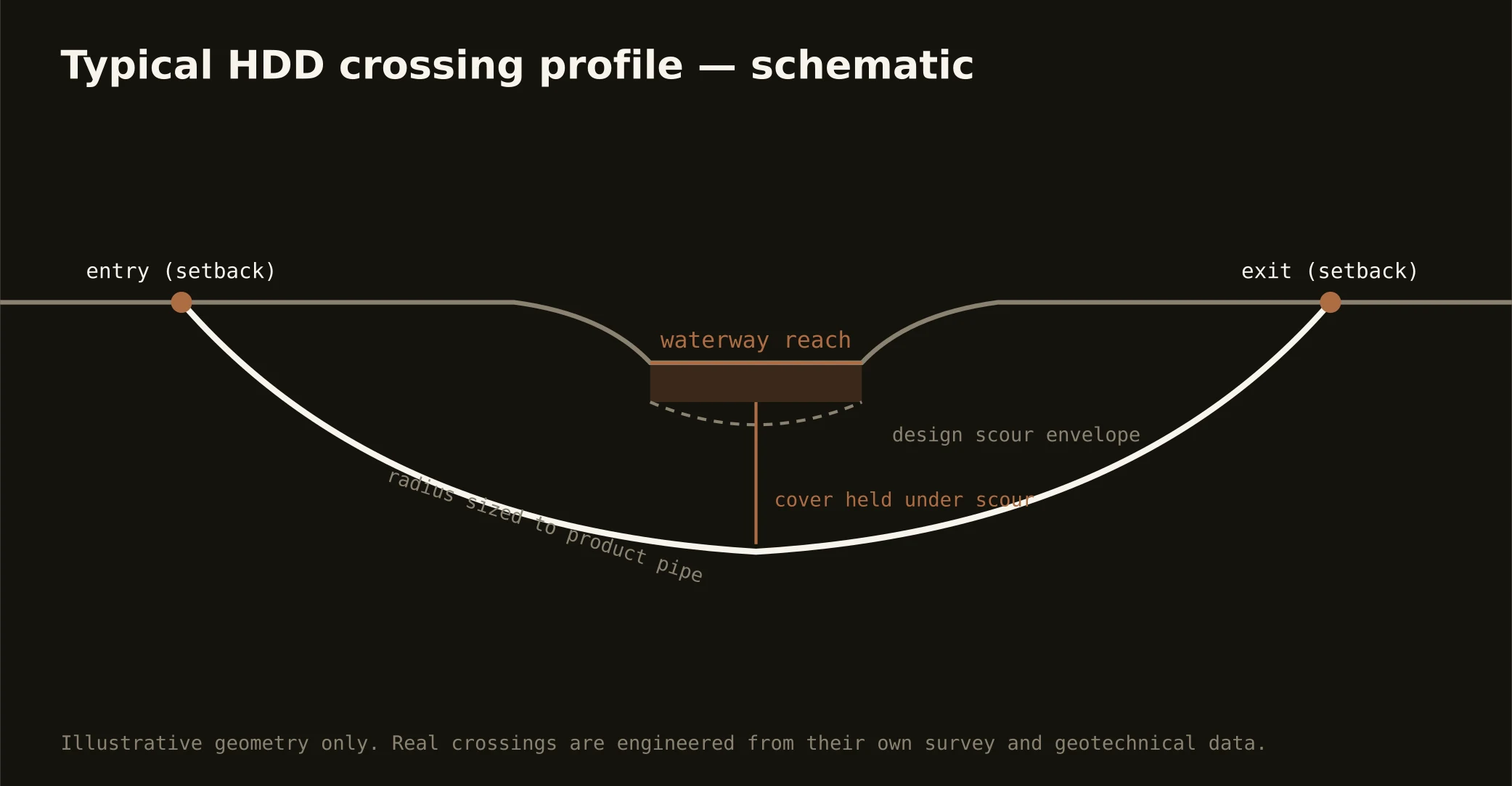
Cover follows the owning authority's standard and sits below everything potholed on the alignment — with waterway and district crossings running to the administering authorities' criteria, and depths chosen with the clay's seasonal movement in mind. The bore plan states your number and your belt before mobilization.
Does storm season change the schedule?
It disciplines it: this region carries the Gulf's hardest recent lessons — wind and record rainfall both — and plans accordingly: staging stays storm-aware, marsh work watches the forecasts, and the rebuild surges after a hit compress timelines the network's scale is built to meet. The Triangle plans from experience; so does the trade that serves it.
Ready to put a number on a real crossing? Send the scope — a person prices it.